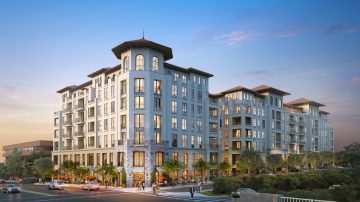
South Pasadena: New Development Breaking Ground 2026 “The Raymond”. Three buildings, 156 independent units, 50 affordable units, and 82 assisted living and memory care units. Integrated outdoor terraces will draw residents to green spaces.
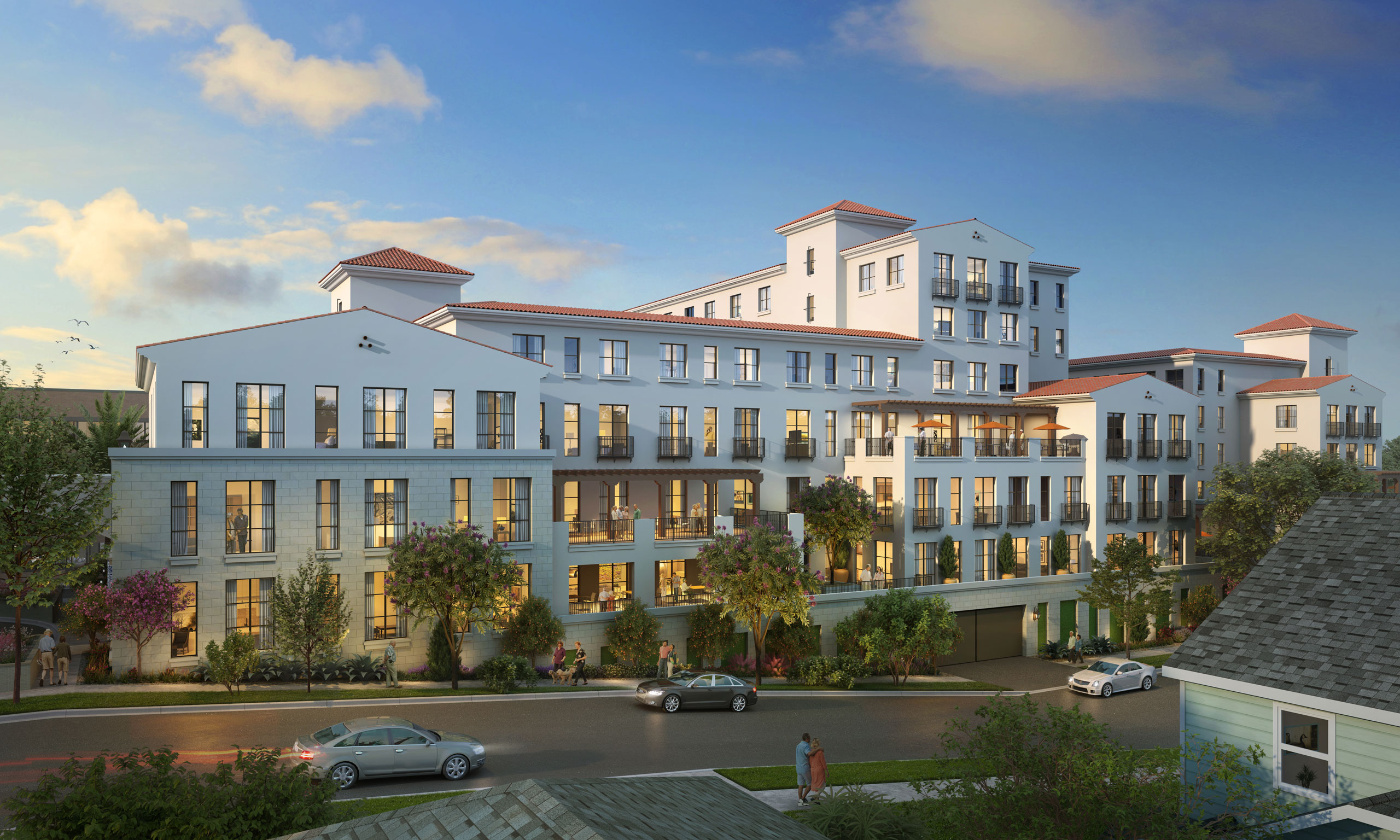
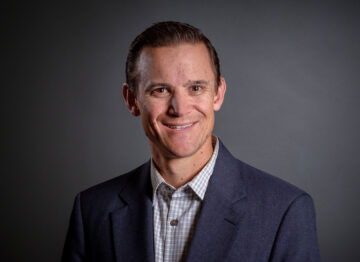
New Development Breaking Ground 2026 The Raymond | Odom Stamps and Laurel Myers of the South Pasadena-based Architecture and Interior Design firm Stamps & Stamps, as well as attorney Doug Yokomozio of Nida & Romyn, P.C., advised Greenbridge Investment Partners, helping usher the project through the entitlement and permitting process with the City of South Pasadena. Looney & Associates leads The Raymond’s interior design, and LandStudio 360 oversees the development’s landscape design.
Part 1: Years in the Making – The South Pasadenan News has been following this project since the purchase of the 625 Fair Oaks Property back in 2018.
Preface: When I sat down with Fareed Kanani and Ben Seager for a 90-minute interview earlier this month, I expected the usual polished, and guarded, answers developers typically give when facing public skepticism and local scrutiny. What I found instead was a conversation — candid, detailed, and genuinely rooted in a respect for South Pasadena.
The project data, public records, and knowable history of this development we already had a handle on; I wanted to know who are these developers and what are thinking.
I was skeptical of this project a few years back. The size, the timing, the optics — all of it. Like many of our readers and neighbors, I had questions. But after a deep review of the plans, the city’s history with Greenbridge, the architects and property operators’ track records, I came away knowing that this isn’t an ‘outside investor opportunistic money grab’ project. It’s a serious, thoughtful build by people who deeply care about their results. They have found a healthy respect for what South Pasadenans stand for, our lifestyle and culture. They get it.
The Raymond could have been something entirely different: A high-density, low-cost complex dropped onto Fair Oaks under the protection of state law, with no design context and no accountability. That’s what’s happening in other California cities right now.
Instead, we’re getting a steel-frame, resort-quality senior community designed by local hands, rooted in local history, and guided by civic cooperation — the first in generations.
This project won’t please everyone. No project could. We know that growth is inevitable and South Pasadenans are not opposed to it — but how we grow is what matters. The Raymond is our chance to prove that South Pasadena can have a shared vision, build larger than residents are used to, and evolve a little in a useful way, without losing identity and gaining lifestyle advantages.
Part 1: Years in the Making
More than a decade in concept and nearly seven years in planning, The Raymond is now moving toward reality at 601–625 Fair Oaks Avenue — a project that has become both the most ambitious and most scrutinized development in South Pasadena’s modern history.
Groundbreaking is expected Spring 2026 – pending final City Planning clockwork.
The seven-story luxury senior living community — the largest private development the city has seen in nearly a century — stands at the corner on Fair Oaks across from Bristol Farms, arguably the main gateway into town. For many South Pasadena residents, this development seems to have popped-in almost overnight, only a year after the passing of ‘Measure SP’ that eliminated the voter imposed 45-foot building height limit.
In reality, this development has been years in the making, navigating multiple (and questionable) city managers, major city hall staff turnover, systemic building code changes, and the ever overbearing state housing mandates. The building mandates out of Sacramento have transformed the entire landscape for how cities like South Pasadena can approve housing projects at all – or more accurately: compelled to set-aside long standing community directed development, traffic considerations, and infrastructure requirements.
When completed, The Raymond will include 287 units across three interconnected buildings: 155 independent-living residences, 82 assisted-living and memory-care suites, and 50 affordable units. It’s the first large-scale residential project in South Pasadena specifically designed for older adults — a community built for ‘aging in place’, with services that allow residents to stay local instead of leaving the city they love.
Started at 85 Units now 287 — Complicated path leads to beneficial outcome
When Greenbridge Investment Partners first acquired the property before the COVID-19 lockdowns, the project envisioned an 85-unit independent senior community. The design was modest in comparison, the footprint tighter, and the concept mostly traditional. But as California’s housing laws evolved into mandated requirements — with new density bonuses, RHNA numbers to hit, and a statewide push for mixed-income senior housing — the opportunity to help South Pasadena meet it’s RHNA requirement and expand the development vision became more of a natural outcome.
Rather than turning the site into a generic high-density apartment complex (which could have been built outright under Sacramento’s housing streamlining rules), Greenbridge chose a harder and more expensive path: a high-quality, architecturally rooted, senior-focused community that would preserve South Pasadena’s aesthetic DNA and modernized lifestyle.
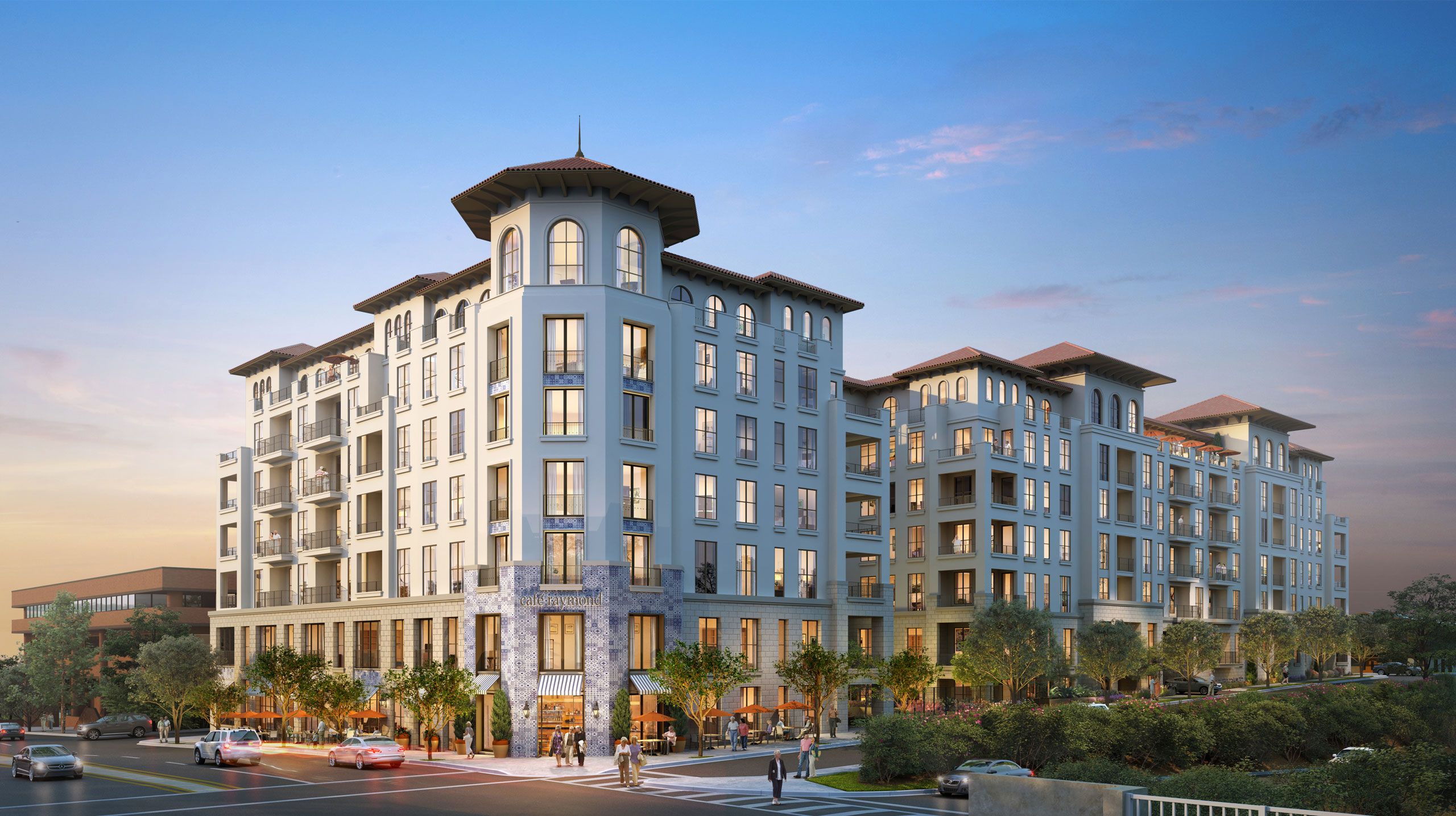 New Development Breaking Ground 2026 The Raymond | Odom Stamps and Laurel Myers of the South Pasadena based Architecture and Interior Design firm Stamps Stamps as well as attorney Doug Yokomozio of Nida Romyn PC advised Greenbridge Investment Partners helping usher the project through the entitlement and permitting process with the City of South Pasadena Looney Associates leads The Raymonds interior design and LandStudio 360 oversees the developments landscape design
“We could have built a very different project… more profitable and far less expensive to build” says developer Fareed Kanani, principal at Greenbridge. “But after learning more about South Pasadena history, the town’s lifestyle, and its people, I realized South Pasadena needs — and deserves — a residential community that honors its past while serving its residents now; while not adding to the school district population and limiting additional traffic or being a burden on parking. We’re not importing an identity from somewhere else; we’re humbly, conceptually, calling-back to a piece of South Pasadena in a new way.”
The project’s name and architecture pay homage to the original Raymond Hotel, a grand resort that once stood nearby in the late 1800s and early 1900s. That hotel — with its verandas, tilework, and iconic roofline — defined early South Pasadena’s elegance. The new Raymond borrows that lineage not as nostalgia but as architectural context.
A Community’s Uneasy Relationship with Growth
South Pasadena is a city fiercely protective of its small-town scale. It was founded on it. Residents remember Measure SP — approved just last year — as a promise to maintain control over height and zoning. Now, the idea of a seven-story building rising on Fair Oaks Avenue feels to like a jolt to that promise.
For those who haven’t followed the project closely, the sudden visibility of The Raymond has sparked understandable alarm. Many are just learning that this project predates recent zoning debates and has been in the entitlement process for years.
It’s also important to note that the location — on the city’s commercial edge near the freeway — was intentionally chosen to minimize residential disruption. The back side of the site borders single-family homes, and the design team, led by KTGY, says they worked closely with the city to soften massing, taper heights, and use materials that echo South Pasadena’s historical palette.
“We’re replacing an asphalt parking lot with a walkable village,” says Ben Seager, Principal at KTGY. “Each building has its own identity, but together they form a cohesive community — connected by courtyards, terraces, and gardens.”
Design for South Pasadena Culture: Building for the Future
The Raymond’s design references the Mediterranean and Spanish Revival motifs found throughout the city: clay barrel-tile roofs, arched colonnades, towers anchoring corners, and the use of azulejo-style hand-painted tiles reminiscent of Pasadena’s craftsman heritage.
Citrus trees will fill the terraces — a deliberate nod to the orange groves that once lined Fair Oaks Avenue — while public art, including hand-painted tile murals, will anchor the street-facing façade. Inside, plans include a speakeasy-inspired gathering space, rooftop pool and terrace, fine dining venues, and a full wellness and fitness center.
This is not a budget build. The structure will be steel, not wood-frame — rare for projects of this size — signaling a long-term investment in both safety and quality.
KTGY’s team emphasizes that this isn’t just about aesthetics. It’s about longevity: designing a living environment to meld and be welcomed with the city itself.
A Developer With Local Ties
Kanani’s approach to South Pasadena is not that of an outside developer parachuting in. A longtime Pasadena-area resident, he’s restored several historic properties across the San Gabriel Valley — including the Star-News building, the Hill & Washington corners, and other adaptive reuse projects.
He’s the first to admit that The Raymond has been a test of endurance.
“It hasn’t been easy,” Kanani said in our interview. “We’ve been through multiple city managers, planning directors, and turnover after turnover. But we never stopped believing in the project. Now we have a city manager and a planning department who understand the process, and the collaboration has been excellent.”
That collaboration includes Odom Stamps of the South Pasadena-based firm Stamps & Stamps, who served as consultant and liaison between Greenbridge, the design team, and City Hall. A former mayor and longtime South Pasadenan, Stamps’ presence has been pivotal.
“He knows every block, every concern, and every point of civic pride,” Kanani says. “Without Odom, we wouldn’t have made it through the code reconciliation. He helped bridge the city’s design standards with what we were trying to achieve.”
From Conflict to Collaboration to Approvals
The early years were rocky. COVID hit in the middle of the city’s turnover. Meetings stalled. Entitlements slowed. Some in City Hall resisted approving a project that large, fearing backlash.
But as Kanani notes, “The way to fix that wasn’t to fight the city — it was to listen.”
He credits City Manager Todd Hileman and the current planning staff for “a pragmatic, transparent approach” that allowed The Raymond to reach final entitlement. City officials, for their part, have acknowledged the project’s cooperative tone and responsiveness to input — a rarity in California’s often adversarial development climate.
The design team revised setbacks, increased tree replacement ratios, and created what they call “step-down architecture” — reducing height and mass toward residential edges while keeping the tallest elements oriented toward Fair Oaks.
Even construction logistics are under active coordination with City Hall, to minimize disruption for nearby homeowners. Plans include limited hours, staggered deliveries, and strict dust and noise controls.
Why This Project Matters | Some Perspective
For all the controversy, The Raymond may prove to be exactly the kind of development South Pasadena needs right now.
California’s population is aging rapidly, and local families often face a painful choice: leave town to find suitable senior housing, or attempt to retrofit century-old homes for accessibility. This project offers a third path — allowing residents to age in place, close to family, friends, and the community they’ve built their lives around.
The 50 affordable units add another layer: access for those with moderate incomes who would otherwise be priced out of new construction. Combined with the assisted-living and memory-care components, it creates a continuum of care that few cities this size can offer.
“The biggest misconception,” Kanani says, “is that this is a walled-off luxury compound. It’s not. It’s integrated into the city — connected by pedestrian paths, local retail, and an electric-car shuttle for residents to access museums, gardens, and shops.”
The Raymond also meaningfully contributes to South Pasadena’s state housing obligations (RHNA numbers), providing nearly 300 new units while adhering to the city’s design and use expectations — something that helps preserve local planning authority against state intervention.
A Benchmark for Future Development
City planners and architects alike say The Raymond is being watched closely, not only for its scale but for its process. It represents a new model for how South Pasadena can engage with the unavoidable reality of state housing law while maintaining design integrity.
“This is a benchmark project,” Stamps said in an earlier public meeting. “We can either resist the future and have it forced upon us, or we can shape it ourselves. The Raymond lets us set the standard.”
That benchmark is as much about transparency as architecture. Greenbridge and KTGY have kept meetings open, shared plans publicly, and made themselves available to neighborhood groups. It’s something residents are used to — and it’s important to residents.
Not Just Another Development
Beyond the numbers and renderings, The Raymond is, at its core, about restoration — of trust, of identity, and of civic ambition.
For years, South Pasadena’s development conversations have been mired in fear and fatigue. The CalTrans housing debacle. Severe State overreach. Years of city staff turnover. Residents felt things were being done to them, not with them or for them.
This project might that pattern.
It’s not perfect. The building will dominate the corner. It will change the skyline. But if Greenbridge delivers on its design promises — and early indications suggest they will — The Raymond could prove that growth and preservation is possible and can thrive.
Construction and What Comes Next
According to the developer, The Raymond is scheduled to break ground in 2026, with a multi-year, possibly 3-4 year, construction timeline.
Because it’s a steel-frame structure, construction will take longer than standard wood builds, but it also means greater fire safety, seismic resilience, and durability.
The project’s interior design by Looney & Associates and landscape design by LandStudio 360 promise continuity with South Pasadena’s natural and architectural textures — citrus groves, courtyards, and gardens with filtered light.
Once operational, the property will include on-site employment for dozens of local residents and service staff — adding economic vitality to the Fair Oaks corridor without burdening city infrastructure or the school district.
Stay Tuned for Part 2: “All the numbers, building specs, a who’s-who of site planning leaders, and an update on Shakers Diner”