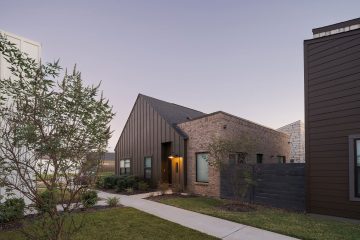
Veranda Dellbrook is setting a new standard for detached rental living in the Houston metro.
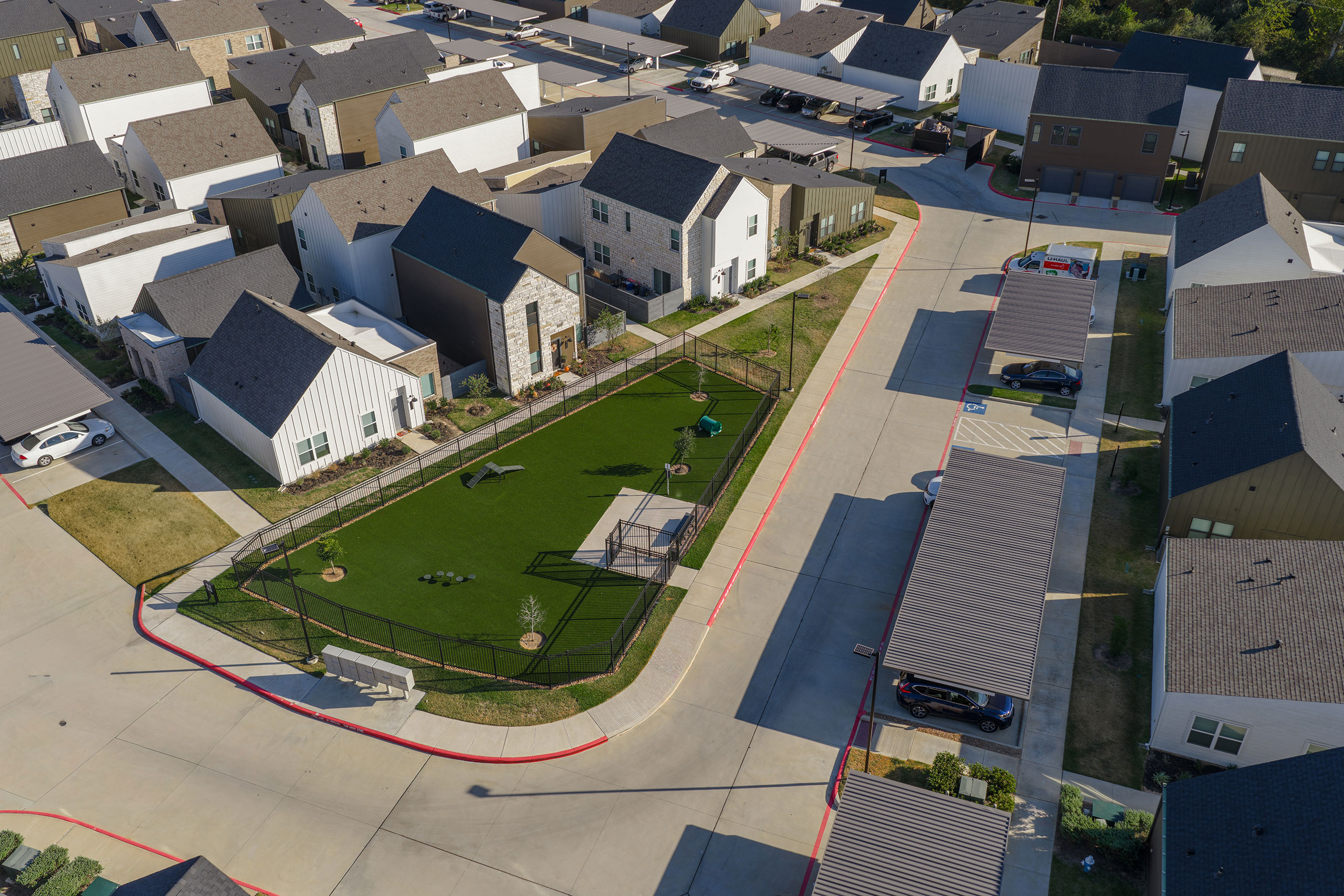
As builders search for smarter, more adaptable build-to-rent (BTR) models, the recently completed Veranda Dellbrook community in Hockley, Texas, by KTGY and Empire Homes offers a compelling blueprint.
The 182-home development—located within the Dellrose master plan in the Houston market—draws inspiration from a concept developed by KTGY’s research and development studio, known as “The Patch.”
Below, KTGY’s director of research and development Marissa Kasdan and principal Alan Scales share how the team transformed the R+D “Patch” concept into a market-ready community designed for livability, flexibility, and long-term performance.
Explain the idea behind “The Patch” concept and what sparked its creation.
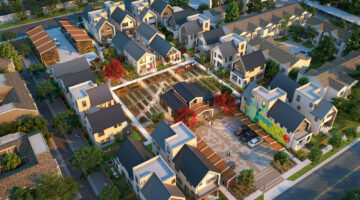
Kasdan: Inspiration for The Patch concept design originated with a client who came to us with questions about agrihoods. The client knew that we were passionate about new and unique ways that people live, but at that time we had not yet designed an agrihood community. We studied different ways that this type of community could be designed, focusing on the benefits of a neighborhood with a bigger purpose and emphasizing healthy eating, walkability, and community connection. Initially, this concept did not specifically address the growing trend of build-to-rent communities, but soon we identified a parallel between The Patch and BTR. The small cottage-style homes oriented around a shared community amenity, with less emphasis on parking and more on outdoor open space, aligned nicely with the priorities of BTR residents.
How did the strategy evolve from the original “Patch” concept to the realized homes at Veranda Dellbrook?
Kasdan: As with all our R+D concept designs, they serve as a starting point. For the Veranda Dellbrook project, The Patch provided the initial framework. While The Patch helped us communicate ideas with the client, Veranda Dellbrook was designed specifically to meet the goals of that development, factoring in site parameters, financial objectives, and demographic specifics. The built site incorporates small cottage homes with a series of internal walkways in lieu of internal drive aisles, encouraging community connection. However, through the development of the Veranda Dellbrook site, the neighborhood farm gave way to other, more flexibly programmed outdoor spaces, reflecting the needs of the community it intends to serve.
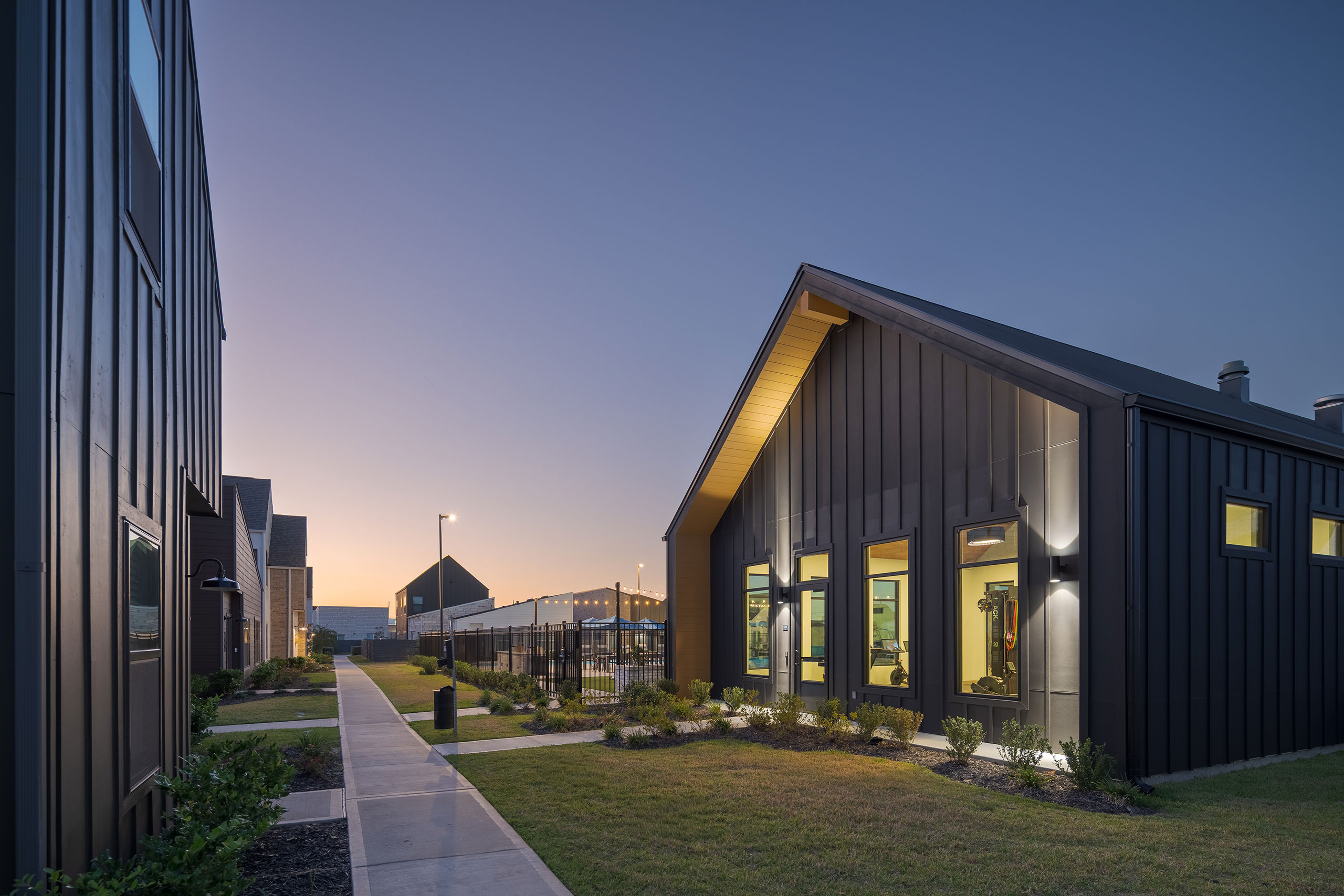
Veranda Dellbrook uses a single, repeatable 634-square-foot floor plan module. What made this approach the right choice for this site and product type?
Scales: The intent behind the modularity was twofold: create a predictable and repeatable plan that could be cost-effective to build within large-scale communities. Kitchens and bathrooms shared a common layout with the same cabinets, countertops, fixtures, and appliances, allowing for ease of purchasing, construction, and notably, long-term maintenance. The other aspect that the modularity provided was flexibility in the final mix of homes. The two- and three-bedroom options sit in the same footprint, so if the market changed during design and early construction, they could pivot. Future communities can also be planned and easily modified, as other local markets often demand higher or lower bedroom counts.
You mentioned designing with “deep sensitivity to how people want to live.” What were some of the most important livability details you insisted on?
Scales: Private open space and connectivity were the underlying goals in designing the homes and community plan. We focused on creating appropriately sized outdoor spaces to accommodate pets, children, or simply a place to barbecue and gather with friends. The vast majority of the homes at Veranda Dellbrook are detached, providing residents with more privacy while replicating the look and feel of homeownership, something less common in rental communities. The homes were organized around walkable streets and paseos, allowing for connections with neighbors and connecting to outdoor amenity spaces throughout the community.
How did you determine the optimal spacing between homes to balance density targets with livability and daylight needs?
Scales: There is always a balancing act between livability and functionality, code compliance, and density. The short answer is 10 feet, providing flexibility in how the space can be used, just enough for a table and barbecue for young families. At the same time, with single-story homes, that spacing brings ample light into the yards. Also, 10 feet allows for non-rated and cost-effective construction. Another key aspect for the private open space is privacy. The design of the homes focuses private yard access to one side of the home only, creating an inactive wall on the opposite side of the home. When combined in the land plan, we achieve a balance between livable spaces and density.
How did you preserve architectural variety while still using a repetitive module?
Scales: Architectural variety was provided in several ways, starting with form and massing, but complemented by color and material selection. The initial goal was to create simple but varied rooflines using different roof pitches, varied shapes, including sheds, gables, and even some flat roofs. With a handful of two-story homes strategically placed on site, the intent was to create a dynamic street scene further enhanced by color and material variation. Some color schemes relied on light and modern tones, while others contrasted that with warm and moody tones.

What’s one design choice you made here that you think the rest of the industry hasn’t fully embraced yet—but will?
Scales: The BTR industry has come a long way and is doing great things for attainable housing. I would love to see more focus on design-forward solutions. It is obvious that simple, repeatable homes can be easiest to build, but maintaining a focus on design to set yourself apart from the competition should be a priority as we create homes, neighborhoods, and communities that will house our future.
What lessons from Veranda Dellbrook are you already applying to the next generation of BTR communities?
Scales: We are continuing to pursue several ideas that stem from our R+D and Veranda Dellbrook examples. Modularity seems to be a big topic, if not true shop-built modular, then at least repeatable spaces by design. This includes creating stackable modules, paired homes, and modules that allow for garages to attach or tuck under similar floor plans, all of which provide ultimate flexibility when choosing the right home for various markets.