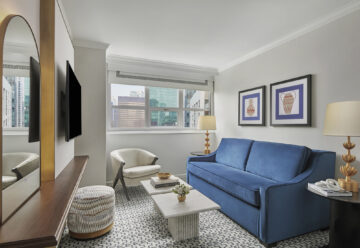
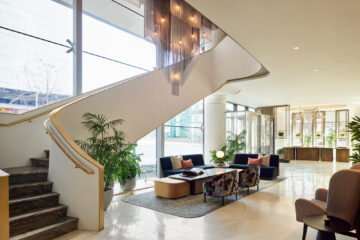
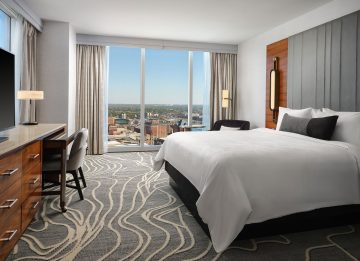
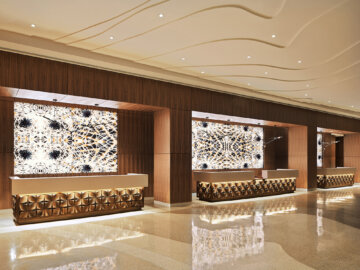
 What’s “in” for 2026? “Individuality,” “innovation” and “authenticity.” These words are somewhat of a cliché in both fashion and interior design, but there is something to be said about a look that implies one is not trying too hard to be something he is not. The same holds for hotel and resort design, which reflects the aspirations, goals and values of its clientele.
While we can intuit which interior design elements will date quickly, we also have to recognize that trends come and go so rapidly that it can be challenging to figure out which ones will ultimately go the distance. Therefore, remodels and redesigns should be intentional and strategic rather than conceived in a black-and-white context. It is inevitable that flooring, wall covering, light fixtures and furniture will need replacing with wear and tear. Accessories, artwork and details that define a property’s identity may also need to be reconsidered to ensure the lifestyle messaging the décor projects resonates with travelers’ expectations.
“Hotel renovations are being reimagined,” said Gina Deary, principal at design and architecture firm KTGY. “The most successful projects aren’t defined by how much money is spent. They’re defined by precision, bravery and a willingness to make a few high-impact decisions that shift the entire identity of a property without a full overhaul. With rising costs and evolving guest expectations, this mindset has become essential.”
Deary and other designers and experts project 2026 will bring a sharper focus on recyclable and responsibly sourced materials that look elevated without carrying a luxury price tag. Properties are turning to locally sourced architectural materials whenever possible, as materials found or purchased closer to home not only preserve the architectural integrity of a property but also reduce carbon impact, avoid long shipping routes, minimize delays and ground the design story in its geographic area.
MORE FOR LESS
“When budgets are fixed, the priority should be the arrival experience, corridors and a few concentrated guestroom moments such as the headboard wall and vanity zones, [which shape] a guest’s emotional memory of the stay,” Deary said.
However, before rethinking anything, a good line of communication needs to be established with your design team or company of choice once you’ve completed vetting your candidates. “When we meet with clients, we ask for their priorities for the renovation,” said Kelli Schaffran, interior design principal at K2M Design, noting that this lets the team know where they should spend more.
For clients without a priority list, Schaffran recommends developing one starting with the spaces that directly impact the guest experience, such as guestrooms, bathrooms and the lobby, as it sets the “I’ve arrived” spirit and is a key area for first impressions. The guestroom (bedding, lighting, technology) and bathroom upgrades (i.e., shower and bathroom fixtures), meanwhile, are top priority because they directly impact the guest experience.
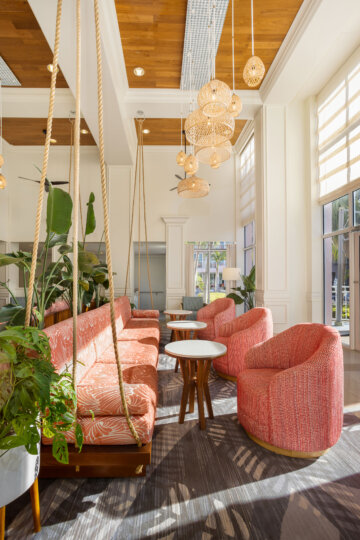
Properties with smaller budgets can aim for maximum impact by using sustainable materials and curated vintage pieces that will make a visual impact, Deary said. Among micro-trends, budget-friendly options include rattan lighting, stone-look tile, modular greenery and large-format landscape murals. This is evidenced by the entryways of KTGY’s high-profile work for the Intercontinental Chicago Magnificent Mile; JW Marriott properties in Charlotte, N.C.; Indianapolis; and Austin, Texas; the Marriott Hutchinson Island (Fla.) Beach Resort; the Detroit Foundation Hotel; and the Monarch Hotel Dallas.
In a similar fashion, when budgets are tight, Alex Kuby, associate principal at DyeLot Interiors in Vancouver, Canada, recommends focusing on the “guest journey’s key moments.” Across these spaces, DyeLot designers target improvements that enhance both emotional impact and operational efficiency.
“The lobby, registration and bar or lounge areas shape the guest’s perception of the entire property, so upgrades here have an outsized impact on value and guest satisfaction,” she said. “Next, we prioritize guestroom bathrooms and the primary touchpoints around the bed, including lighting, soft goods and key casegoods. These elements determine whether a room feels fresh and intentional or outdated.”
CCY Interiors Studio Director Melanie Grant said that the firm’s design team is focused on finding key accent pieces, artwork, styling elements and décor from vintage shops rather than generic mass-produced items.
“Sourcing guestroom side tables, lamps, décor and art from local markets allows products to see a second life and connects guests with unique objects d’art,” she said. “In a city like New Orleans, where we typically work, having this idea of authenticity feel more palpable and immediate has helped in our creation of hospitality spaces that feel more connected to their environments.”
Some of her recommended swaps include recycled terrazzo and composite stones replacing dated granite, ocean-plastic and post-consumer panels replacing decorative laminates, recycled aluminum or steel trims replacing heavy wood moldings and reclaimed wood veneers replacing faux finishes. Other sub-trends arriving in 2026 include water-inspired gradients, mineral- and desert-influenced palettes, microbiophilic details (planter-integrated millwork, small nature vignettes), daylight-mimicking lighting and curved architectural edges.
“While guestrooms should be well-appointed and feel updated, the public amenity spaces offer more impact for your dollar,” said Grant. “Publicly accessible social spaces—like coffee shops, lobbies, restaurants and event spaces—allow your hospitality brand a more impactful opportunity to be perceived and experienced by more people who will be enticed to book a stay. A strong example is our work at Copper Vine Inn, a boutique 11-room inn. The building is directly connected to a thriving wine pub, where guests who often frequent the restaurant are some of the best repeat ‘stay-cation’ customers for the inn.”
STRIKING THE RIGHT TONE
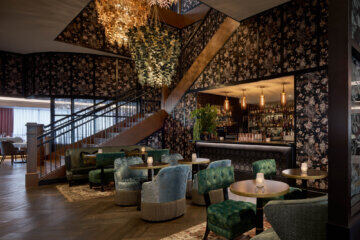
A dramatic color shift with nature-based hues can convey the feeling of a full renovation. However, some colors, like emerald green, heavy ochres and clay reds, can overwhelm the viewer and date quickly. Deary suggested less intense but evocative shades such as mineral blues, copper neutrals, dusty sage greens, mineral blush and graphite taupe, which will age more gracefully and shift beautifully under layered lighting as the days and nights progress.
“If the property is currently bright white or neutral, flip the script,” she said. “Paint is not a backdrop, it’s a strategy. Mineral blues, herbal greens, graphite taupes and muted terracotta tones instantly modernize a space and add depth. One brave move makes existing furnishings and lighting feel curated and intentional. Color should also always support the brand or category personality, as well as the location where the hotel is based. Lobbies need to communicate the brand instantly and should feel like a mood preview of the entire stay through richer, layered and nuanced palettes.”
As rooms should relax people after long travel days, Lori Kreke, K2M’s director of interior design, and Schaffran suggested colors with low saturation and soft undertones rather than high-energy colors that may evoke a nightclub or a children’s play area. Lifestyle or select-service hotels, for example, should aim for fresher, more energetic palettes including charcoal green, bronze, deep navy, warm taupe, olive and stone.
CCY Architects’ work is also closely connected to the exterior environment based on the project site and the surrounding landscape, so its designers prefer nature-inspired palettes for their clients’ color schemes. Grant noted that strategic pops of color, including more intense tones of the room’s base color palette, fold in best when designers are respectful of the surrounding environment and true to the design intent.
“For a modern yet timeless effect, consider tone-on-tone, wall-to-trim colors, where the trim is one shade darker than the wall,” Grant said. “This allows for some relief from the previous color-drenching trend while giving attention to interesting moldings and framing openings. [In the case of yellow], the correct shade will fill your soul with sunshine, but the incorrect one will make you think you are trapped in an institutional nightmare. When working with yellow, we always sample multiple shades and have the painter place them close to windows and far away so you can see the impact natural light will have on the tone.”
While tactile fabrics continue to trend, Deary and the K2M experts agree that they work best when they reinforce the story of a geographic location, climate and audience, rather than just the look of a room. Deary notes that open-weave performance textures and breezy accents are suited for warm climates, while felted weaves and cozy bouclés harmonize with cooler climates. Tailored and structured textures suit properties that cater to business travelers and convention attendees. Relaxed textures and organic textiles, meanwhile, set the mood in resort settings.
“Textured anything adds a subtle dimension to any space on any surface,” Kreke said. “In tropical climates, go with breathable bouclé and airy woven blends. In cold climates, it’s all about velvets and woolly knits. Desert properties benefit from dry-touch cottons and microfiber suede. For family or business hotels, you want textures that are ‘touchable but tough.’ For luxury, go custom with artisanal weaves or embroidered textures with a hand-crafted feel.”
SECOND NATURE
In the wake of the quiet luxury movement, Kreke said that instead of chasing perfection, hotels are leaning into materials that feel authentic, lived-in and calming like hand-troweled plaster walls, raw-edge stone, aged wood, linen upholstery and ceramics that look handmade rather than machine-perfect. These details tie into “Wabi Sabi,” a Japanese aesthetic philosophy that celebrates authenticity, character, imperfection, simplicity, and the beauty of things that age naturally over time.
Deary stressed the importance of being mindful of trends that by now are perceived as overdone, even in standard-bearing five-star properties, including green walls and spa-themed gestures. She noted that the movement toward greater authenticity across the board includes hand-wrought geologically inspired materials and regionally rooted artisan accent pieces.
Likewise, Kreke declared that the “classic green wall” has officially had its moment. She recommends that luxury hotels should lean into local craftsmanship, slow-luxury sensory design and tech-integrated biophilia such as circadian lighting and subtle oxygenating plant systems. Luxury properties leading into the charge are focused on refined restraint or balancing the organic with the refined.
“Pair textured plaster with smooth stone, or pair aged wood with modern lighting,” she said. “Use sculptural furniture but in warm, natural finishes. The goal is a space that feels curated but not curated to death. Materials that get better with time instead of worse… because imperfections aren’t flaws.”
Schaffran and Kreke saw several innovative sustainable materials at recent industry trade shows. Moss wall covers can replace the higher-maintenance living-wall concepts. Beyond its aesthetics, it is ideal for lobby focal walls, spa relaxation rooms and conference rooms as it naturally absorbs sound. Windows from Luminous SkyCeilings and Luminous Virtual Windows can be used to add biophilic illusions of nature. Green Hides offers “leathers” for hospitality interiors that are made from reclaimed materials from the food industry.
In contrast to Schaffran and Kreke, DyeLot’s Kuby said generic moss walls and copy-and-paste spa palettes are increasingly overdone in luxury hotels. However, among recycled-content and recyclable surface options she sees becoming standard, she cites bio-based terrazzo, high-performance LVT with recycled content, cork and rubber hybrids and durable porcelain or sintered stone among the best choices.
“These materials often replace wall-to-wall broadloom carpet with low-quality backings, dated granites and older vinyls that do not age well,” she explained. “On the textiles side, recycled PET and solution-dyed performance fabrics are replacing fragile natural fibers and older faux leathers that show wear quickly.”
NEW FRONTIERS IN “SPACE”
With “bleisure” travel gaining prominence, the challenge of finding a middle ground between tailored business-y spaces and breezy, relaxation-inducing spaces becomes a necessity rather than an option. Kreke said that hotels are becoming “shapeshifters. Think transformer furniture, lobbies that switch from coworking by day to cocktails by night, modular guestrooms and hybrid amenity spaces like fitness lounges that double as social hubs. It’s multitasking, but chic.”
This paradigm is also expanding. “For so long, flexible and multifunctional just meant stacking chairs and flip-nest tables,” said Grant. “With the saturation of portable devices and work-from-anywhere policies, people have adapted to work in lounges and other configurations. This allows for multifunctional spaces that offer an environment that feels and functions more like a lounge with posture-diverse seating configurations that can truly operate more than just an empty room with a table and chairs.”
CCY has integrated new forms of technology and inventive reinterpretations of traditional modalities of the hospitality experience, according to Grant. At Copper Vine Inn, the host stand replaces the traditional “stodgy” check-in desk. Here, guests are quickly seated, welcomed and given a glass of wine as a way to relax, unwind and check in. Once checked in, guests use an app for property access and access to the “Inn Keeper” concierge service.
Rethinking rooms as flexible, option-filled spaces continues to be a major driver of renovation decisions, according to Deary.
“The goal is to utilize one space to create multiple revenue stories,” she said. “Hotels now need hybrid lobby zones that function as co-work, lounge and F&B outlets, and dual-purpose furnishings that can be used in a variety of contexts. Wellness rooms can be forged out of underutilized meeting nooks, and acoustic sliding screens can help rezone spaces instantly.”
Upgrading different areas of a hotel or resort can be achieved with improved features that guests are demanding, even if they cannot see them. “The best tech elevates the guest experience without announcing itself,” she continued. “In 2026, we will see more design-led technology that is nearly invisible. This includes plug-and-play mobile power hubs, integrated charging surfaces within stone or wood, AI-driven room controls, gesture-based mobile check-in, predictive maintenance sensors and QR-enabled amenities that feel personalized rather than utilitarian.”
POWERING UP
“2025 has shown that technology must adapt to people, not the other way around,” said Lucy Han, business line leader for building automation, ABB Smart Buildings. “The hospitality sector is under immense pressure to deliver comfort, efficiency and ESG transparency. This is driving the adoption of intuitive, interoperable systems that help hotel teams manage spaces more easily and deliver a smoother guest experience. Design has become just as important as interfaces should feel natural to use. Operators and guests engage with systems more effectively, which in turn directly strengthens ESG outcomes.”
Kreke predicted more invisible and intuitive technology, “hospitality with fewer buttons and more brainpower,” will arrive in 2026, including biometric check-ins, AI-driven housekeeping routes, sound-mapping acoustic systems and minibars that restock themselves based on guest patterns. Schaffran points to AI-driven systems that dynamically adjust lighting, humidity and air quality to mimic natural cycles, supporting circadian rhythms and indoor plant health.
Aldo Sciacca, head of product portfolio and R&D, ABB Smart Buildings, has found that digital systems can transcend making resource management measurable and visible. With sensors and connected controls, hotel operators can track energy and water use in real time, automate lighting and HVAC to prevent waste, and provide transparent data for ESG reporting. These sustainable measures appeal to guests from all backgrounds while helping hotels create an environment that feels comfortable and effortless.
“This year’s smartest purchasing strategies aren’t about doing more—they’re about making the right bold moves,” Deary said, reflecting on how subtle changes and intentional choices can make the most dramatic impact. “A fearless color strategy, a standout art moment, better material choices, thoughtful texture and subtle biophilic cues can transform a property far beyond its budget. With clarity, discipline and a willingness to be brave, any hotel can deliver a renovation that feels modern, meaningful and unforgettable.”